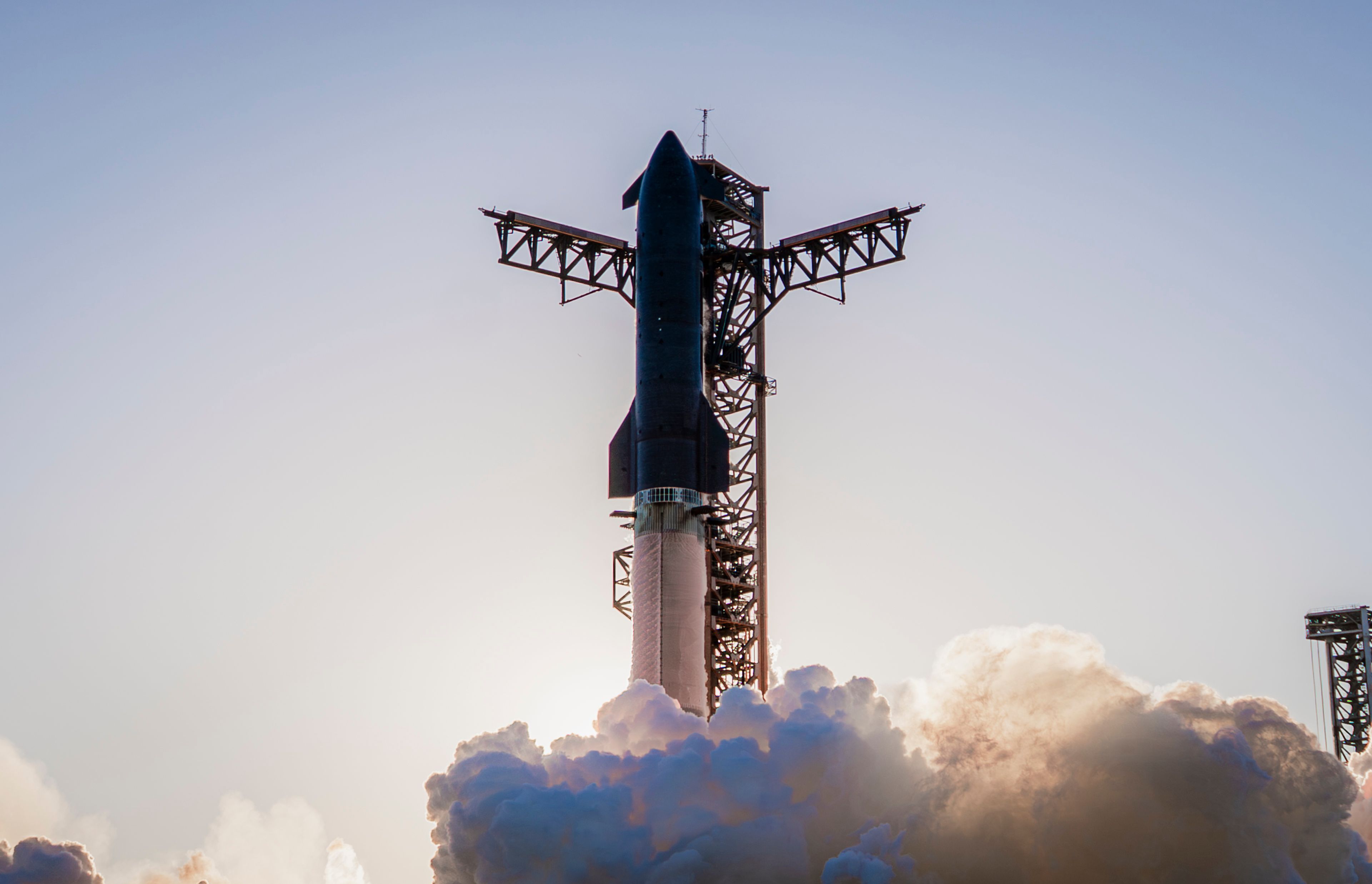
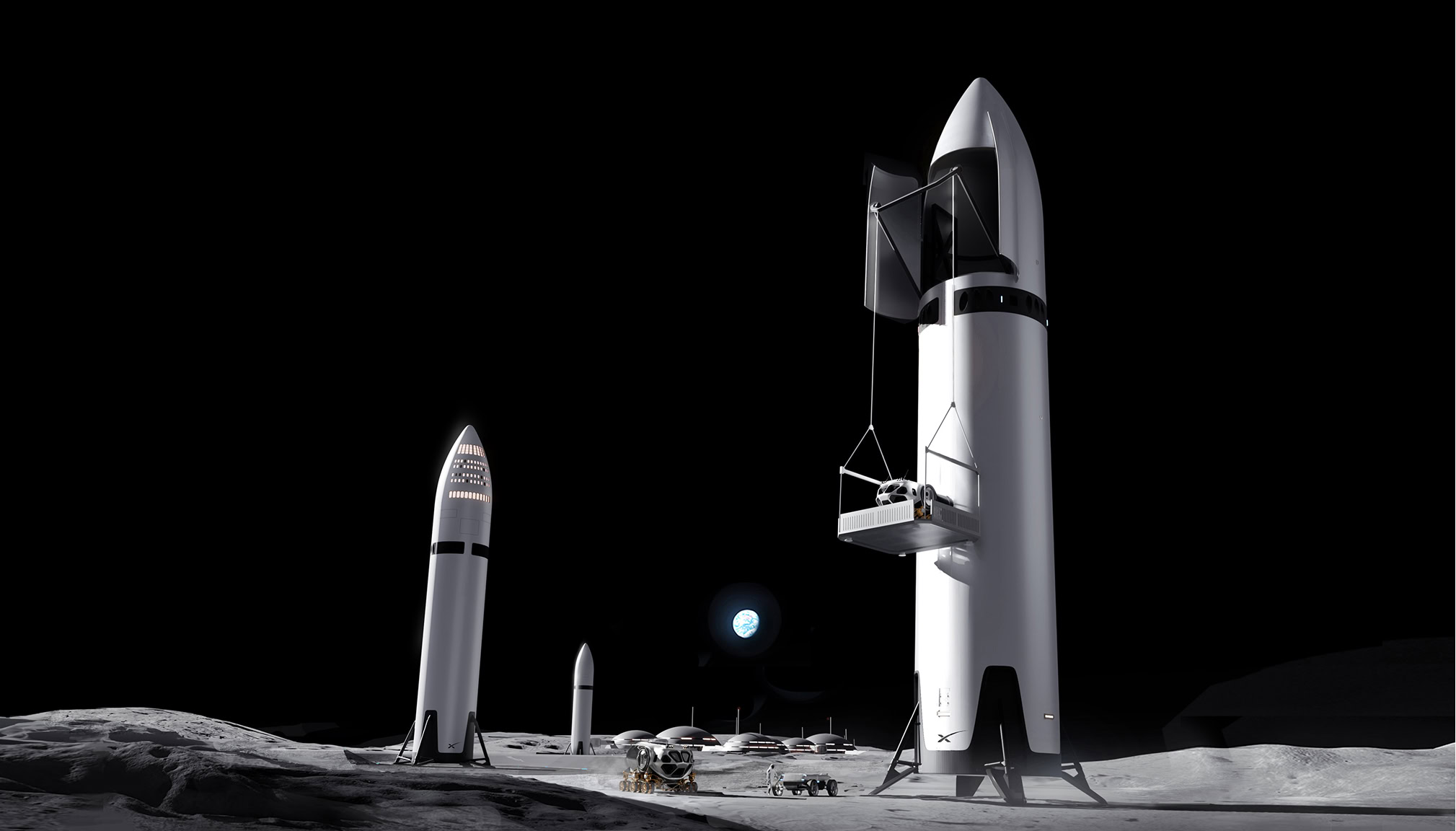
Starship is SpaceX's fully reusable super-heavy-lift launch system, designed to carry crew and cargo to Earth orbit, the Moon, and Mars. The program is iterating through flight tests toward routine orbital reentry, in-orbit refueling, and rapid booster and ship reuse, with NASA's Artemis lunar lander among its near-term missions.
- Valuation
- -
- Change
- +6.4%
- Founded
- 2019
- Headquarters
- Starbase, TX
- Employees
- -
About Starship
Starship is SpaceX's super-heavy-lift launch system, designed from the outset for full reusability - both the Super Heavy booster and the Starship upper stage are meant to fly again, not be discarded. The program iterates through frequent flight tests rather than years-long design cycles between vehicles, trading a higher visible failure rate early on for a much faster path to a mature, reusable system.
NASA's Artemis program has selected a variant of Starship as the human landing system for returning astronauts to the lunar surface, and in-orbit propellant transfer - refueling one Starship from another in orbit - is the key technology unlock that makes both the Moon missions and eventual Mars transport possible.
Build a fully reusable transport system capable of carrying crew and cargo to the Moon, Mars, and beyond.
How it got here
- 2019
First prototype hop
Starhopper's low-altitude test flights validated the Raptor engine and basic vehicle handling.
- 2023
First integrated flight test
Super Heavy and Starship flew together for the first time as a full stack.
- 2024
First tower catch
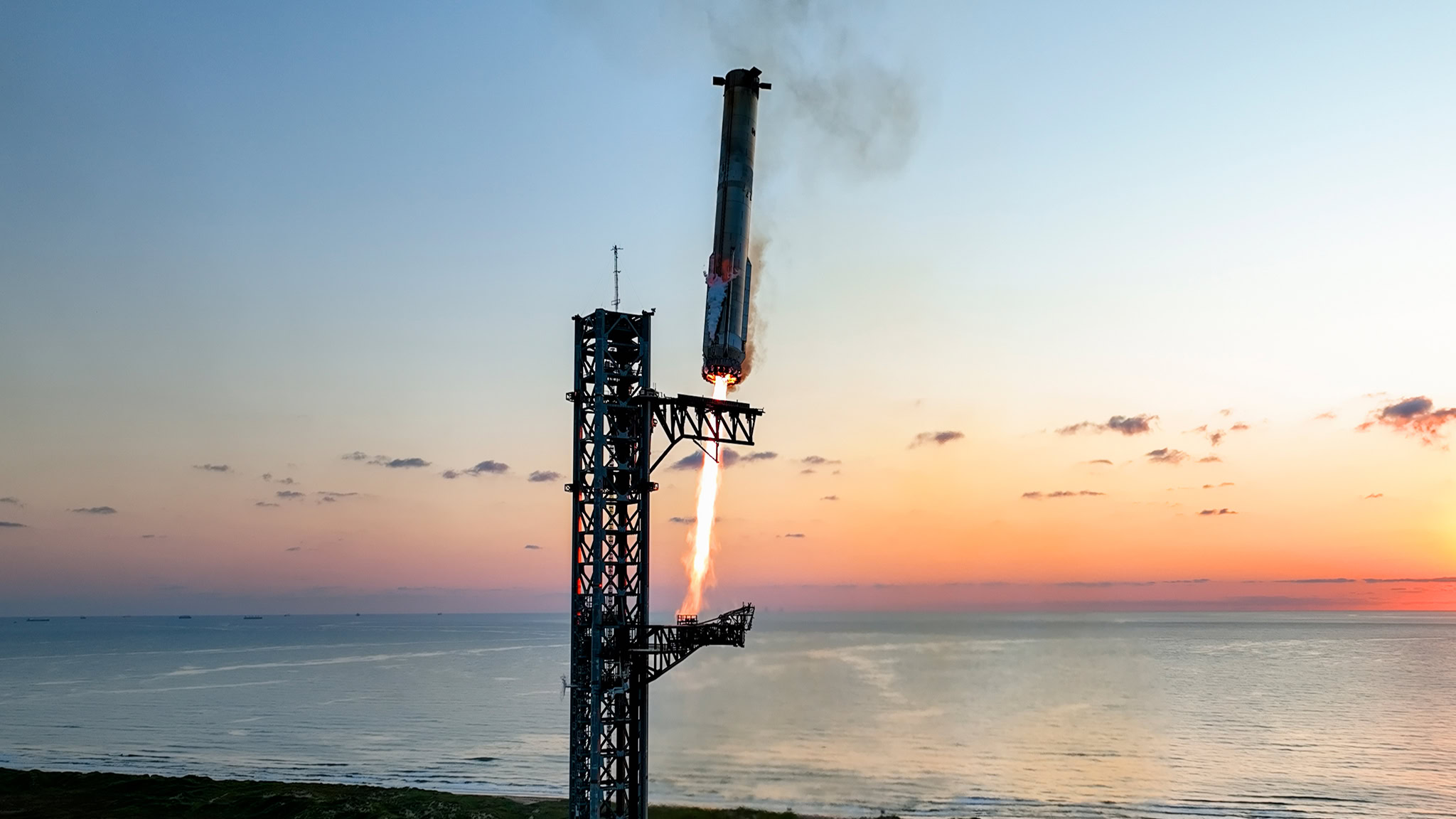
Super Heavy returned to the launch site and was caught mid-air by the tower's arms, without landing legs.
- 2025
First orbital refueling demonstration
Two Starships performed a propellant transfer in orbit, validating the technique Artemis and Mars missions depend on.
- 2026
Uncrewed HLS demonstration targeted
An uncrewed lunar landing demonstration is targeted ahead of the first crewed Artemis surface mission.
Core pillars
Full & rapid reuse
Both stages are designed to be caught, inspected, and reflown, aiming for reuse cadence closer to an aircraft than a traditional rocket.
Methalox propulsion
Raptor engines burn methane and liquid oxygen - propellants that can, in principle, be manufactured on Mars from local resources.
In-orbit refueling
Propellant transfer between Starships in orbit is what turns a vehicle limited to Earth orbit into one capable of the Moon and Mars.
Super heavy-lift capacity
Designed to deliver over 150 tonnes to low Earth orbit in fully reusable configuration - several times a Falcon Heavy payload.
Facilities
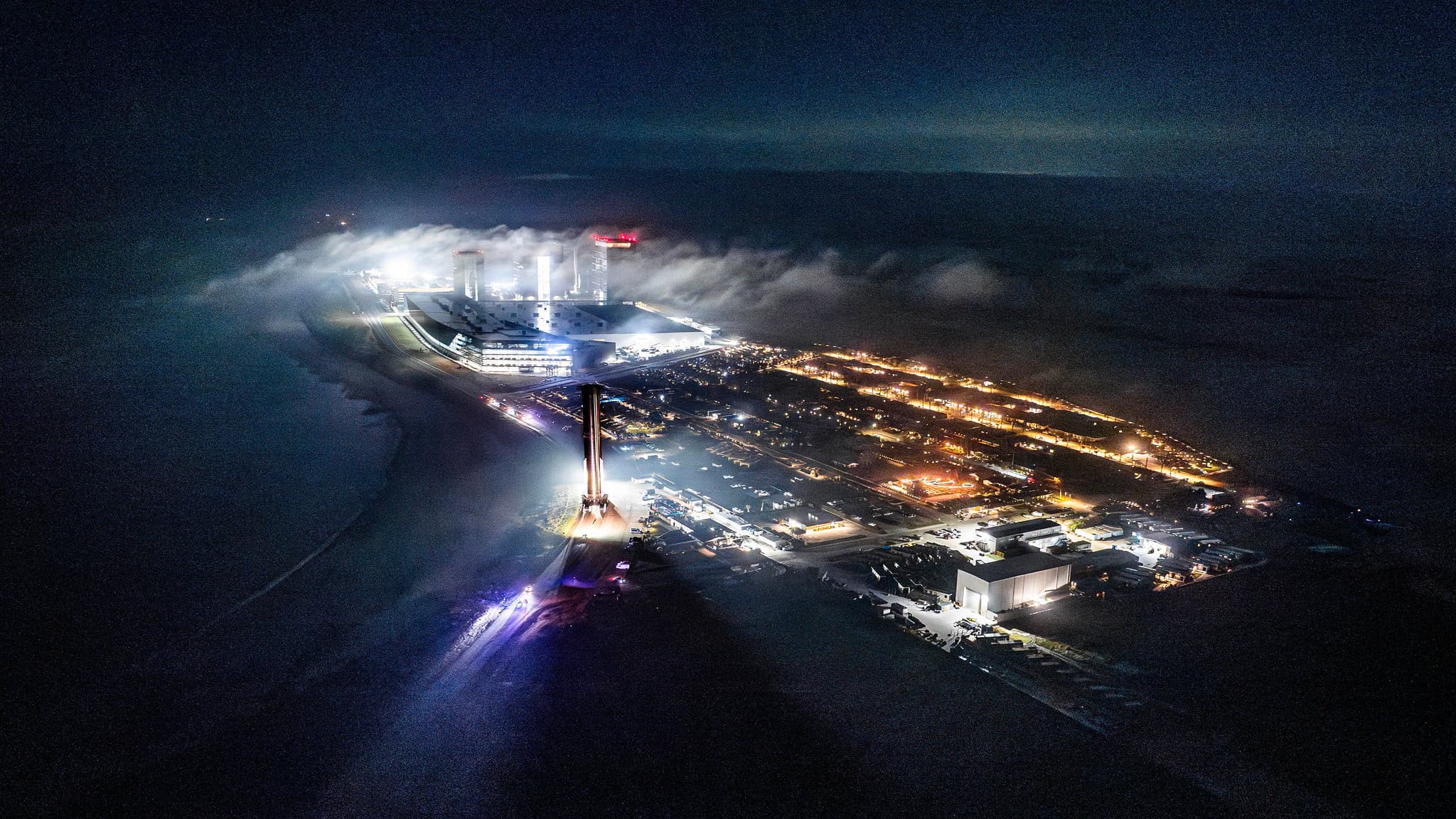
Starbase Orbital Launch Pads
Two orbital launch pads plus the integration towers that stack, catch, and refurbish both Starship and Super Heavy.
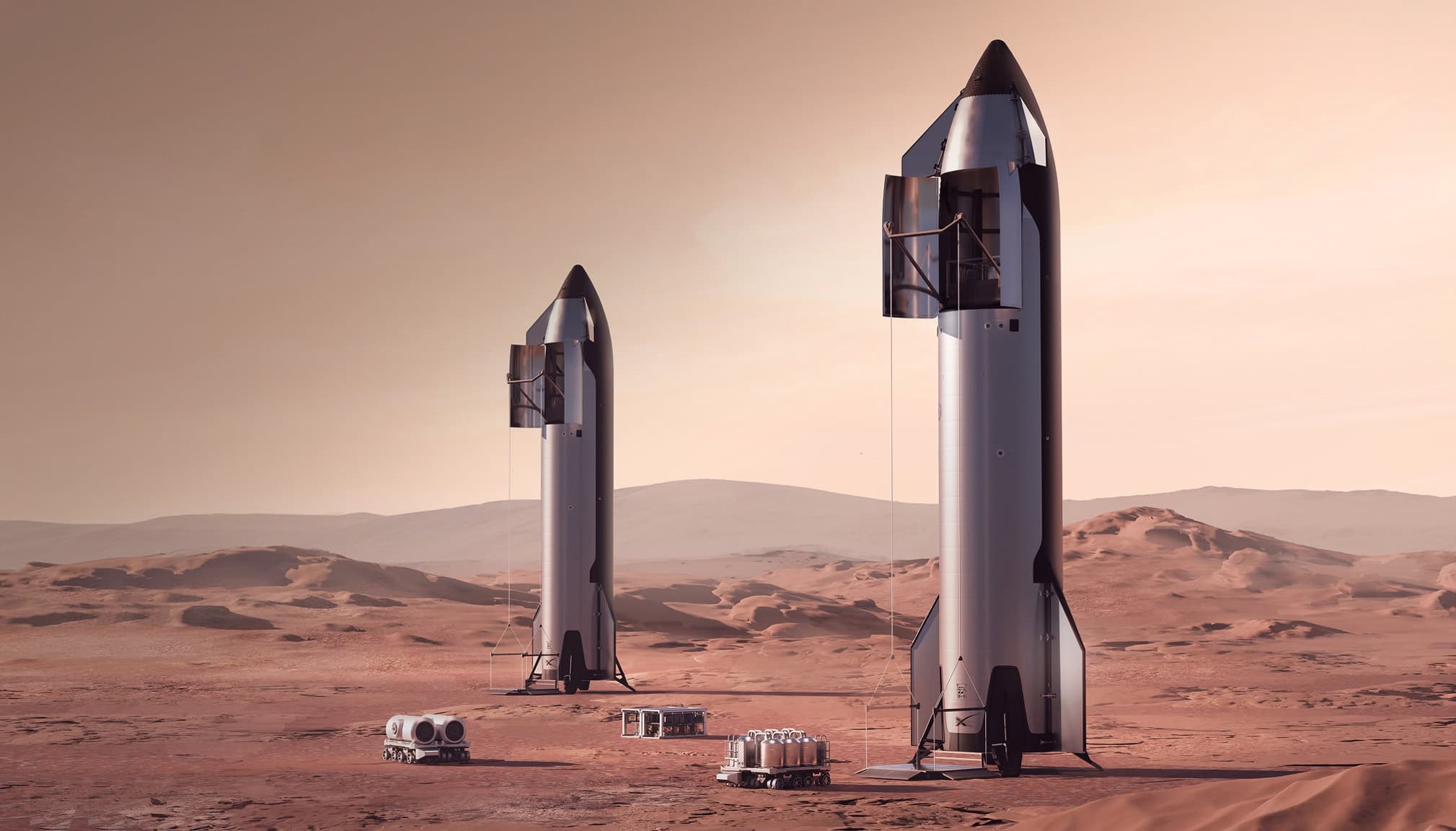
Massey's Test Site
Static-fire and cryogenic proof-test stands used to qualify engines and tanks ahead of flight.
Scale
How it's kept safe
- Every test flight carries an automated flight termination system independent of the primary flight computer.
- The iterative flight-test approach is a deliberate safety strategy: failures are found and fixed early, in an uncrewed test program, rather than discovered on a crewed mission.
- Static-fire and cryogenic proof testing at Massey's happens ahead of every new vehicle's first flight.
Environmental note
Methalox propellant is the one architecture that can, in principle, be produced on Mars itself from local water ice and atmospheric CO2 - a requirement for any return trip, not just an efficiency choice on Earth.
Frequently asked
What's the difference between Starship and Falcon 9?+
Starship is a much larger, fully reusable two-stage system designed for the Moon and Mars; Falcon 9 is a smaller, partially reusable vehicle for Earth-orbit missions.
Is Starship flying crew yet?+
Not yet - current flights are uncrewed test missions building toward the Artemis lunar lander demonstration.
How does the tower catch work?+
Super Heavy returns to the launch site and is caught mid-air by two arms on the launch tower, skipping the weight and complexity of landing legs.
Can Starship be purchased for a mission?+
Super Heavy and Starship HLS are both listed as purchasable/contractable vehicles with configurable options - see the products below.