

Terafab AI
Custom silicon, fabricated for the compute the group needs.
Terafab AI designs and fabricates custom AI accelerator chips purpose-built for training and inference workloads across the group, reducing dependence on third-party silicon and giving xAI, Tesla, and Optimus a hardware roadmap tuned to their own model architectures rather than general-purpose GPUs.
- Valuation
- -
- Change
- +8.9%
- Founded
- 2025
- Headquarters
- Austin, TX
- Employees
- 400+
About Terafab AI
Terafab AI designs and fabricates custom AI accelerator chips purpose-built for the training and inference workloads that run across the group, reducing dependence on general-purpose third-party GPUs. TF-1, the first-generation accelerator, is fabricated on a 3nm process and tuned specifically for the model architectures xAI trains, trading general-purpose flexibility for efficiency on known workloads.
TF-1 units are already deployed inside Colossus alongside third-party accelerators, with the group's compute roadmap shifting a growing share of capacity to Terafab silicon with each successive generation.
Design and fabricate the silicon the group's AI systems run on.
How it got here
- 2025
Founded
Started to give the group's AI systems a hardware roadmap tuned to its own model architectures rather than general-purpose GPUs.
- 2025
First tape-out
The initial TF-1 chip design was finalized and sent to fabrication.
- 2026
TF-1 enters production
First-generation accelerators began shipping at production volume.
- 2026
Deployed inside Colossus
TF-1 units began running Grok training and inference workloads alongside third-party accelerators in xAI's Memphis cluster.
Core pillars
Purpose-built architecture
TF-1's design is tuned specifically for the model shapes xAI trains, rather than aiming for general-purpose flexibility.
Vertical integration with xAI
Chip design and the training stack it runs are developed with direct visibility into each other's roadmap.
Efficiency-first design
Lower cost and power per token is the core design goal, not raw peak throughput on paper.
In-house fabrication partnership
Design work happens in-house, fabricated through a leading-edge foundry partner rather than an off-the-shelf chip vendor.
Facilities
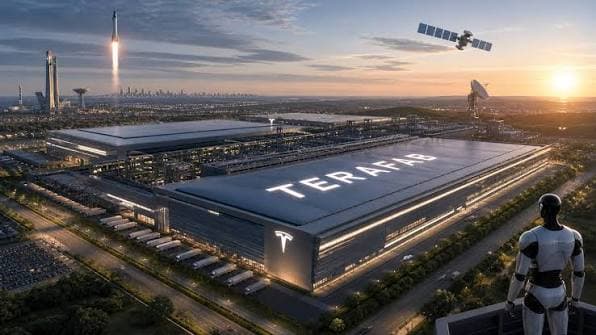
Design Headquarters
Chip architecture, design, and verification work.
Fabrication Partner Site
3nm-process fabrication carried out through a leading-edge external foundry partnership.
Scale
How it's kept safe
- Fabrication and supply chain partners are vetted under the group's standard security and quality review process.
- Each production batch goes through hardware validation testing before deployment into live training infrastructure.
Environmental note
TF-1's efficiency-first design targets lower cost and power per token relative to general-purpose GPUs, directly reducing the energy draw of every training run it's used in.
Frequently asked
What is TF-1?+
Terafab AI's first-generation AI accelerator chip, fabricated on a 3nm process and tuned specifically for training and inference workloads like Grok.
Can enterprises buy TF-1?+
Yes - it's listed at an enterprise quote price per unit; see the product listing below to start a quote.
How does it compare to general-purpose GPUs?+
TF-1 trades general-purpose flexibility for efficiency on the specific model architectures it was designed around, aiming for a lower cost and power draw per token on those workloads.
Is TF-1 used outside the xAI group?+
Current production deploys primarily inside Colossus; enterprise sales outside the group are handled through a separate quote process.